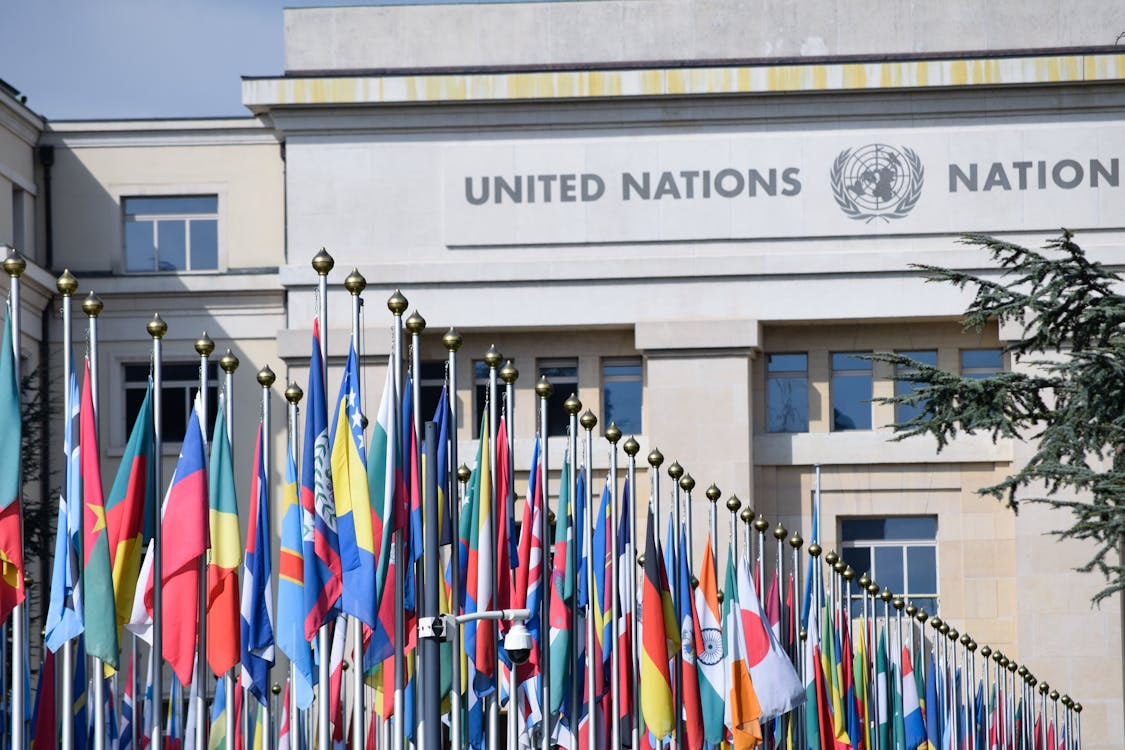
The United Nations was founded in 1945 with a clear mission: to maintain international peace, promote cooperation, and prevent another global conflict. However, today’s geopolitical landscape appears vastly different from the world that influenced the UN’s creation.
Rising nationalism, regional power blocs, and worsening global tensions have fragmented international politics. As countries pursue their own strategic objectives, the question arises: Can the United Nations remain effective, or is it losing relevance in a multipolar world?
A World Divided: Challenges to Multilateral Cooperation
The rise of geopolitical rivalry, particularly among major powers such as the United States, China, and Russia, has made consensus within the UN increasingly challenging. The Security Council, designed to act swiftly in crises, is frequently deadlocked as permanent members veto resolutions that conflict with national interests. This paralysis has been visible in conflicts ranging from Syria to Ukraine, where Security Council action has been limited or blocked entirely.
Beyond great-power competition, the global political environment has shifted toward unilateral action. Countries are forming regional alliances and security coalitions outside the UN framework, often bypassing the organization altogether. The resurgence of nationalism has weakened the appetite for international agreements, as governments prioritize sovereignty over collective action. These trends create fundamental challenges for an institution built on consensus, diplomacy, and shared responsibility.
For how shifting alliances reshape global commerce, see How Trade Routes Are Shifting in a Post-Pandemic World.
UN Peacekeeping and Humanitarian Missions Under Strain
Peacekeeping remains one of the UN’s most visible roles, but it faces growing obstacles. Missions in Mali, the Democratic Republic of the Congo, and South Sudan have demonstrated the challenges of maintaining stability in regions plagued by complex internal conflicts and competing foreign interests. Peacekeepers often operate with limited mandates, insufficient resources, and inconsistent political backing.
Humanitarian operations are also under pressure. Climate disasters, mass displacement, and global conflicts have led to record-high humanitarian needs, stretching agencies like the World Food Programme and UNHCR to their limits. Funding gaps persist as donor fatigue grows and the number of crises continues to increase. While the UN’s humanitarian arms remain critical lifelines, they face an uphill battle against rising demand.
Despite the challenges, these missions demonstrate that the UN remains indispensable in regions where no alternative organizations can mobilize resources at a global scale.
See How Climate Migration Is Quietly Reshaping the World for context on today’s humanitarian crises.
Efforts to Modernize: Reforming a 20th-Century Institution
Recognizing its structural challenges, the UN has begun exploring reforms. Expanding the Security Council is among the most debated proposals, with countries such as India, Brazil, Germany, and Japan advocating for permanent seats. Supporters argue that the current structure reflects post–World War II power balances rather than today’s geopolitical reality.
Digital transformation is another key focus. The UN is increasingly investing in early-warning systems, cyber governance frameworks, and digital diplomacy tools to address emerging threats, including misinformation, cyberattacks, and autonomous weapons. These efforts aim to ensure the UN remains relevant in a world where technology is reshaping global power dynamics.
The organization is also working to strengthen climate cooperation. The Paris Agreement, facilitated under the UN framework, remains one of the 21st century’s most significant achievements, uniting nearly every nation behind a shared environmental commitment, albeit with uneven progress.
For another perspective on shifting global influence, explore The Future of Global Currencies: Is the Dollar’s Reign Ending?
A New Role in a Fragmented World
While many question the UN’s relevance, it remains one of the few platforms where all nations can engage in dialogue. This is an essential function in an era of rising tensions. Its agencies provide critical global services: coordinating humanitarian aid, setting standards for health and safety, overseeing nuclear inspections, and promoting development goals.
The future UN may look different, with a less focused approach on enforcing peace and a greater orientation toward managing global interdependence. Its strength may lie in convening nations, shaping norms, and addressing transnational challenges that no country can solve alone, such as pandemics, climate change, and digital governance.
The UN’s role is evolving, not disappearing. In a fragmented world, it may become even more essential as a stabilizing force, but only if it can adapt to the shifting geopolitics of the 21st century.