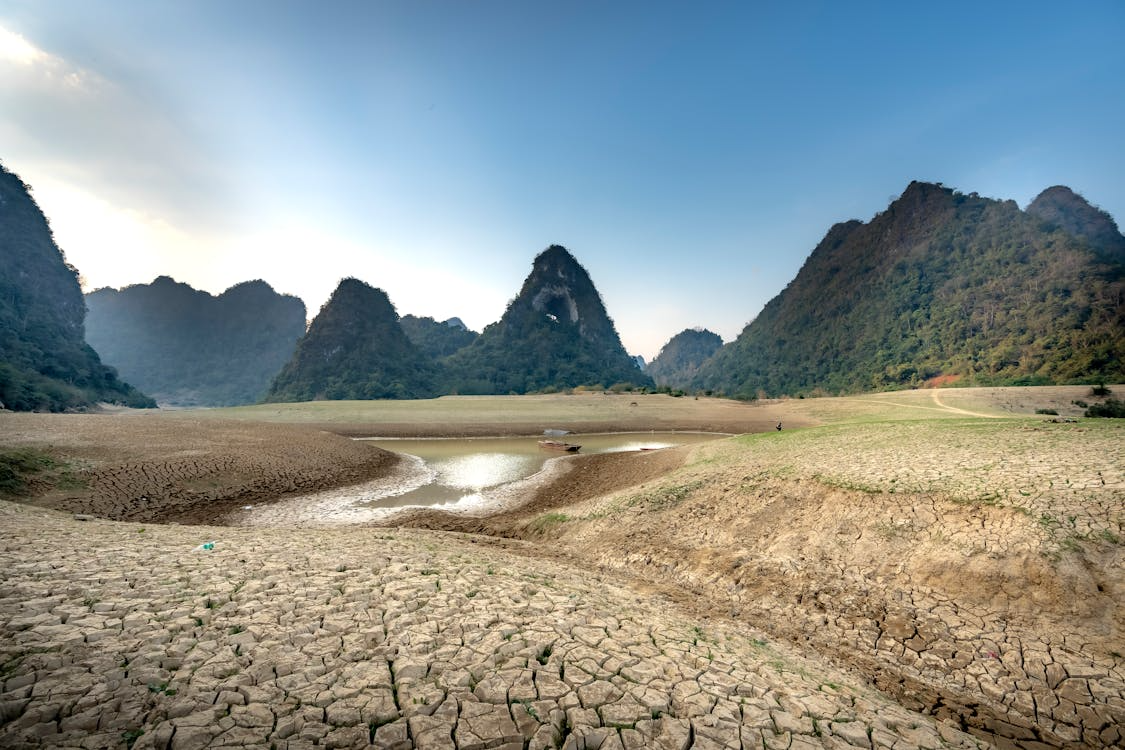
Water has long been treated as an abundant, renewable resource: something so essential and widespread that its value was rarely questioned. But population growth, industrial expansion, and accelerating climate change are pushing freshwater supplies past their limits, creating a mounting global water scarcity crisis.
Today, more than two billion people reside in water-stressed regions, and this number is expected to continue rising. As nations compete for dwindling resources, experts warn that water could become the next major driver of geopolitical tension, economic instability, and global realignment.
The Growing Imbalance Between Supply and Demand
Freshwater scarcity is expanding at a pace faster than projected in earlier climate models. Rising temperatures intensify evaporation, causing rivers, lakes, and reservoirs to shrink. Meanwhile, agriculture, which consumes roughly 70% of the world’s freshwater, struggles to maintain yields in an era of increasingly unpredictable rainfall. Countries such as India, Pakistan, Mexico, and Iran are rapidly draining their groundwater reserves to compensate for declining surface water, creating long-term deficits that may be impossible to replenish.
Urban growth adds further pressure. Mega-cities like Cape Town, São Paulo, and Chennai have already come dangerously close to “Day Zero,” which is the point at which municipal taps run dry. As populations grow and consumption increases, local water infrastructure is forced to operate beyond its intended capacity, raising the risk of system failures.
Even regions once considered water-secure are feeling the strain. Parts of the American Southwest continue to battle shrinking reservoirs along the Colorado River, while southern Europe faces recurring droughts that strain both agriculture and tourism. The mismatch between rising demand and shrinking supply is becoming one of the defining challenges of the century.
See What the World Can Learn from Indigenous Conservation Models for insights on community-led approaches to resource management.
Geopolitical Flashpoints in a Thirsty World
As water becomes more precious, its role in geopolitical tensions is growing. The Nile Basin, shared by eleven countries, has become a focal point of diplomatic conflict as Ethiopia’s Grand Renaissance Dam shifts control of downstream water flows. Egypt and Sudan fear reduced access to the river that sustains their populations, while Ethiopia views the project as essential for economic development.
In South Asia, the Indus Waters Treaty between India and Pakistan has managed decades of water sharing, yet recent political friction has raised concerns that cooperation could unravel. Meanwhile, China’s control over major rivers flowing from the Tibetan Plateau gives it considerable leverage over neighboring countries, including India, Nepal, and Vietnam.
These disputes highlight the strategic importance of water infrastructure. Dams, canals, and reservoirs are not just engineering projects; they are instruments of national power and influence. As climate pressures intensify, nations may be increasingly tempted to use water access as a bargaining chip or political threat.
Check out The Future of the United Nations in an Era of Fragmentation for more on global tensions.
Economic Consequences That Reshape Global Markets
Beyond the political implications, water scarcity carries enormous economic consequences. Agriculture-dependent economies face crop losses, rising food prices, and increased reliance on imports. Industry-heavy nations risk disruptions in sectors such as semiconductors, textiles, energy production, and mining, each of which requires substantial water inputs.
Companies now face mounting pressure to rethink their operations. Major corporations are adopting water-efficiency goals, investing in recycling systems, and relocating their manufacturing operations to areas with more stable water supplies. Real estate markets are also shifting, as businesses and residents reassess the long-term viability of drought-prone regions.
Investors are taking notice. Water is emerging as a new frontier for financial markets, with funds focused on desalination, infrastructure modernization, and water-efficient technologies gaining traction. Like oil in the 20th century, water is becoming a key driver of economic strategy, influencing trade patterns, investment flows, and national development plans.
Explore How Climate Migration Is Quietly Reshaping the World for more on how climate stress is shifting communities.
How Nations Are Preparing for a Water-Stressed Future
Governments are responding with a mix of innovation, infrastructure upgrades, and policy reform. Israel has become a global leader in desalination and wastewater recycling, demonstrating how technology can convert scarcity into resilience. Singapore, another pioneer, has developed a closed-loop system that recycles wastewater into potable water, thereby reducing its dependence on imports.
Other nations are investing in large-scale conservation strategies. Australia’s Murray-Darling Basin Plan aims to balance agricultural needs with environmental preservation, while the European Union is implementing drought-resilience initiatives across its southern member states. Yet many countries lack the resources or political stability to implement similar measures, increasing the risk of regional instability.
Long-term sustainability will require more than infrastructure alone. Experts emphasize the need for international water-sharing agreements, stronger governance, and climate adaptation strategies that prioritize equitable access to water. Water scarcity is not a problem any nation can solve in isolation; cooperation will be essential to preventing conflict and ensuring stability.