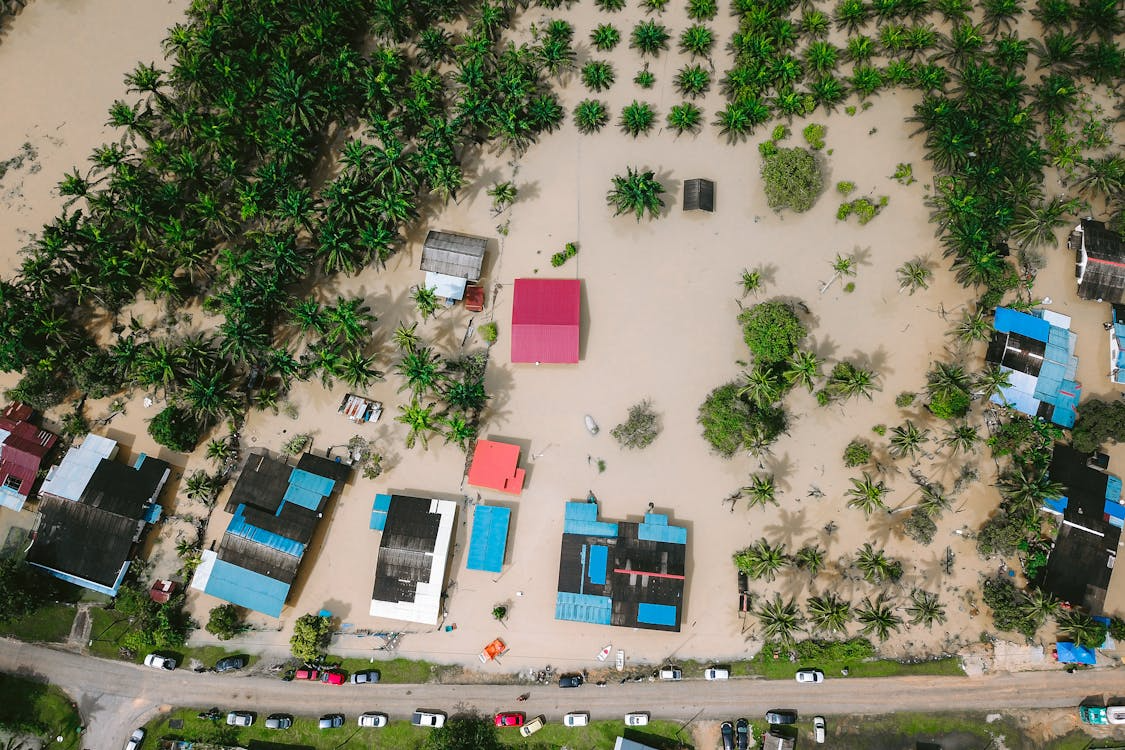
Climate migration is no longer a distant warning—it’s an unfolding reality driving millions of people to move across borders and within their own countries. This climate migration impact is fueled by rising seas, severe droughts, extreme heat, and unpredictable storms that are pushing populations away from regions that can no longer sustain stable livelihoods.
And while these shifts may appear gradual, the ripple effects are reshaping economies, redefining political relationships, and forcing governments worldwide to confront a new era of mobility.
Countries Most Impacted by Climate-Driven Migration
Around the globe, vulnerable countries are facing the earliest and most severe consequences. Low-lying nations, such as Bangladesh, Tuvalu, and the Marshall Islands, are contending with rising sea levels that threaten to submerge entire communities. In Bangladesh alone, millions have already relocated inland, turning cities like Dhaka into pressure points of overcrowding and resource scarcity.
Meanwhile, countries in the Horn of Africa—Somalia, Ethiopia, and Kenya—face recurring drought cycles that devastate agriculture and livestock, forcing rural populations to migrate to urban centers or across borders in search of survival. These patterns aren’t limited to developing regions. In the United States, Louisiana and coastal Florida have seen steady internal migration as hurricanes intensify and flood risks rise. Even parts of southern Europe, particularly Spain, Italy, and Greece, are experiencing population flight from areas repeatedly hit by heatwaves and wildfires.
Each migration flow creates complex demographic shifts: some areas face depopulation and economic decline, while receiving regions experience strain on housing, jobs, and public services. The global map of where people can safely and sustainably live is changing in real time.
See Why Water Scarcity Could Become the Next Oil Crisis for another major migration pressure.
How Climate Change Is Altering Regional Stability
Climate migration is not merely a human story: it’s a geopolitical one. As climate pressures intensify, regions already vulnerable to political or economic fragility may become even more volatile. Water stress in South Asia, for example, heightens tensions between India, Pakistan, and Bangladesh, where millions rely on rivers fed by rapidly melting Himalayan glaciers.
In the Sahel region of Africa, climate-driven resource scarcity has intensified conflict between farmers and herders competing for increasingly scarce arable land. These conflicts often fuel cross-border displacement, creating additional pressure on neighboring countries that already have limited resources of their own. Such tensions reveal how climate change acts as a “threat multiplier,” deepening existing crises and accelerating instability.
For receiving countries, managing large-scale population movement presents its own political challenges. Debates over border controls, humanitarian obligations, and resource allocation can inflame social divisions, especially as climate migrants are often mischaracterized as economic migrants. How nations respond today will set the tone for the global political landscape in the decades ahead.
Read The Future of the United Nations in an Era of Fragmentation to explore how global governance is coping.
How Governments Are Preparing for the Future
Some nations are proactively adapting to the new patterns of climate mobility. The Pacific nation of Fiji has developed policies that enable community relocation to safer areas within the islands, acknowledging that entire villages will need to move as sea levels rise. In Europe, countries such as the Netherlands have long adopted climate adaptation strategies, such as building flood-resistant infrastructure, relocating at-risk communities, and implementing innovative coastal defenses.
Elsewhere, governments are beginning to draft climate migration frameworks. The African Union has expanded its guidelines to address climate-induced displacement, and several Latin American countries are introducing humanitarian visas for individuals fleeing climate-related disasters. Yet many governments lack clear policies, often responding reactively rather than strategically.
Urban planning is also shifting. Cities such as Jakarta, Miami, and Lagos are investing in resilience projects, from elevated housing to improved drainage systems. But infrastructure alone is not enough; policymakers must anticipate the societal, economic, and cultural shifts that accompany migration on a global scale.\
Check The Global Housing Crunch: Can We Build Enough for Everyone? for how cities might house climate migrants.
What the Next Decades Could Look Like
The United Nations estimates that climate migration could reach 200 million people by 2050, though some projections are even higher. This doesn’t mean mass border-crossing on an apocalyptic scale. Much of the movement will be internal, especially from rural to urban areas. But the cumulative effects will be profound.
As climate pressures intensify, some regions will become less habitable, while others, particularly temperate zones with stable water resources, may see population growth. This redistribution could reshape global markets, influence trade routes, and transform labor dynamics. Countries that plan now may gain economic advantages by preparing for new populations and investing in climate-resilient infrastructure.
Climate migration is not a temporary disruption; it’s an emerging global force. Understanding these trends and the wider climate migration impact is critical not only for governments but for individuals and businesses preparing for a rapidly shifting world.