Political instability has become one of the most significant disruptions to global trade. From regional conflicts to mass protests and government collapses, the ripple effects of unrest reach far beyond national borders.
In a world where political unrest and supply chains are tightly connected, even a single disruption can halt production, drive up prices, and alter economic relationships. Understanding how political unrest affects supply chains has become essential for governments, businesses, and consumers alike.
Disruptions That Start Local but Spread Globally
Modern supply chains rely on seamless coordination among manufacturers, logistics providers, ports, and governments to ensure efficient operations. Political unrest can break that chain at any point. When protests shut down transportation networks or factories, production schedules are instantly thrown off course. When governments impose curfews or declare states of emergency, workers are unable to reach plants, and shipments remain stuck at warehouses.
Recent events have demonstrated how quickly local instability can escalate into a global issue. Civil unrest in South Africa disrupted one of Africa’s major manufacturing hubs, creating shortages that affected markets across the continent.
Mass protests in Chile temporarily halted mining operations, impacting global copper supply. In Sri Lanka, the political and economic collapse led to widespread fuel shortages that crippled the country’s export industries. In each case, what began as a domestic political crisis evolved into a disruption that was felt across international markets.
See How Global Inflation Is Changing the Way We Shop and Save for how disruptions hit prices.
Ports, Trade Routes, and Key Industries Under Pressure
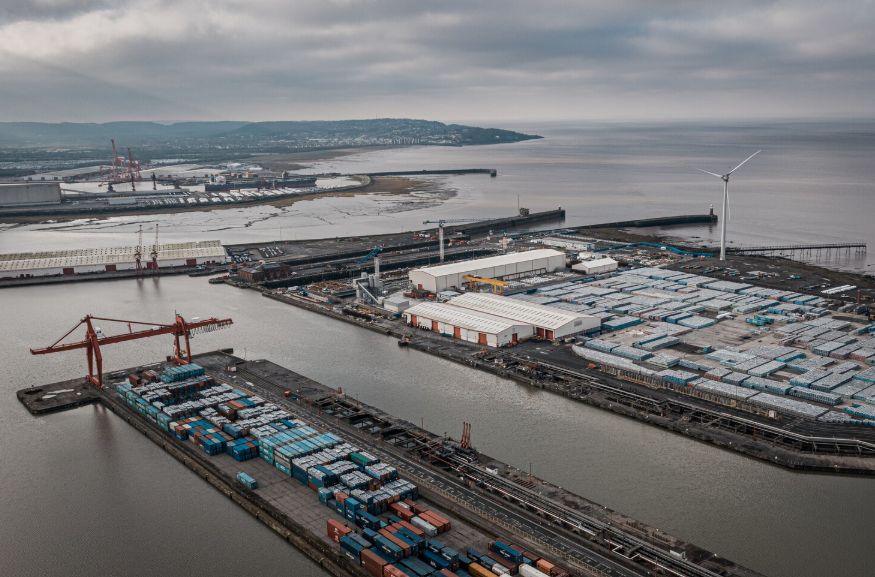
Political unrest often hits hardest at ports and shipping lanes, which are the vital arteries of global commerce. When workers strike or infrastructure becomes unsafe, port operations slow or stop entirely. The 2019–2020 protests in Hong Kong strained one of Asia’s busiest transshipment hubs, affecting trade flows throughout the region. In the Middle East, ongoing instability has repeatedly threatened chokepoints such as the Strait of Hormuz and the Bab el-Mandeb Strait, where a significant portion of the world’s oil shipments pass.
Unrest also impacts critical industries that underpin global supply chains. The semiconductor industry, for example, is susceptible to political tensions in East Asia. Any disruption to production in Taiwan or South Korea would have immediate consequences for electronics, automotive manufacturing, and telecommunications worldwide.
Energy markets face similar vulnerabilities: political instability in oil-rich nations can trigger sudden price fluctuations that reverberate across entire economies. As global trade grows more interdependent, the vulnerability of key industries becomes more pronounced.
For more on changing routes, read How Trade Routes Are Shifting in a Post-Pandemic World.
Shifting Strategies for Supply Chain Resilience
In response to repeated disruptions, companies are reevaluating how and where they operate. Many are diversifying their supplier networks to avoid overreliance on a single country or region. The goal is not to abandon global trade but to build resilience through redundancy and geographic diversity.
Manufacturers are adopting “China+1” strategies by relocating part of their production to countries such as Vietnam, India, and Mexico. Some companies are reshoring or nearshoring to reduce exposure to geopolitical risk. Others are investing in better data analytics and real-time monitoring tools that allow them to track potential disruptions earlier and adjust their logistics accordingly.
Governments are also taking action. Many are strengthening domestic industries considered vital for national security, such as pharmaceuticals, semiconductors, and energy. Trade alliances and regional partnerships are being restructured to prioritize stability, transparency, and long-term cooperation.
Explore Global Infrastructure Mega-Projects That Will Change Trade Forever, for these projects reshape supply chains.
The Future of Supply Chains in an Uncertain World
As political unrest becomes more frequent, global supply chains will continue to evolve. Businesses must strike a balance between efficiency and resilience, and consumers will increasingly feel the effects of disruptions in the form of higher prices and periodic shortages. While technology can help predict and mitigate some risks, no digital tool can eliminate the uncertainty inherent in global politics.
What emerges is a more cautious and diversified trade environment—one in which flexibility, regional networks, and strategic planning matter as much as cost savings. Political instability will remain a constant challenge, but those who understand the link between political unrest and supply chains and adapt early will be best positioned to navigate a rapidly shifting global landscape.